
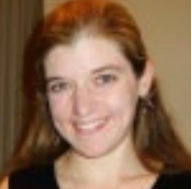

At first, Terry Mutchler says she and state Senator Penny Severns kept their relationship a secret because Mutchler led the Associated Press statehouse bureau chief in Illinois.
For a journalist to have a relationship with a source is a major breech of ethics, as Mutchler was covering issues related to Severns and the rest of the Illinois capitol.
“We struggled on a regular basis with the ethical failures there, but I think now all these years later, all my homophobia and fear of being a lesbian was dressed up as an ethical concern,” Mutchler says.
She and Severns met in 1993 when Mutchler was newly on the AP job and visiting a vending machine. She saw Severns for the first time coming down the steps of the capitol.
The pair maintained the secret relationship even after living together by having Mutchler park her car two miles away and leave before sunrise.
Mutchler has now written a book, “Under this Beautiful Dome: A Senator, a journalist, and the politics of gay love in America,” recalling her deep but private relationship with Severns, which was cut short when the senator — making a run for secretary of state – died of cancer in 1998.
“No matter what your story is, the most important thing is to tell the truth about it,” Mutchler says. “There’s no wrong time to do the right thing.”
The book brings the politics of LGBT rights in the United States in to focus, as even a pair of strong, driven women so familiar with the legislature were closeted in part because of their sexual orientation.
“In ideological terms, it was a century ago,” Mutchler says, adding that central Illinois and Pittsburgh have very similar attitudes when it comes to recognizing and accepting LGBT people with full rights.
Mutchler, 48, who now lives in suburban Philadelphia and works as the first executive director of the state Office of Open Records, says she first starting writing as therapy.
She was in a “downward spiral” for six years after Severns’ death before a friend suggested a 10-day California writing retreat in 2004.
Mutchler says she wanted to get some relief for her feelings there, but that didn’t happen.
“It’s didn’t bring relief, it called up an extreme amount to pain, but that’s what needed to happen,” the author says. “The book started out as really trying to work some healing into my life and to work out some of the pain.”
She says she never wanted her current public office become a “silent editor.”
- Advertisement -

“If I was going to tell the story, I was going to tell the whole story,” Mutchler says. “Some of it I wish I didn’t have to tell, but if you’re going to tell it, you’re going to tell it.”
In the book, she describes how she and Penny felt about each other, happy days spent traveling or in bed and the pair’s exchange of jewelry to “join their hearts” because they couldn’t be legally married.
Then, Mutchler tells of the heartbreak when the pair found a lump in Severns’ left breast.
Mutchler, who grew up in a fundamentalist family, felt tremendous guilt, even taking a new AP job in Alaska.
“I really felt I was the cause of Penny’s cancer because we were lesbians and that leaving her would be the cure,” Mutchler says. She could not sit in the front of the church at Severns’ funeral, but she was there in November 2013 to see Illinois Gov. Pat Quinn sign the bill to make the state the 16th to legalize gay marriage.
Mutchler says she encourages others not to quickly dismiss those who don’t agree with same-sex marriage.
“I think it’s important to make room for people who are still working through that,” she says. “It’s an individual walk that everyone has to make regardless of whether you’re walking with a million people of walking alone, you still have to put one foot in front of the other.”
Mutcher says no matter someone’s politics, she hopes everyone can take something away from the book, whether about preparing better for a partner’s death, taking steps for early cancer detection or supporting same-sex marriage.
“I do hope just one person would read this and say, ‘I’m going to do something differently,’” she says.
On Voting
Mutchler says everyone should vote, especially in midterm elections like those on Nov. 4, while considering a candidate for all of their platform, not just LGBT rights.
“For myself, I make sure I look at a three-dimensional person,” she says. “The great equalizer is the vote,” adding that everyone – from the construction worker to the CEO in the corner office – gets one ballot.
“I think government in the Commonwealth and everywhere, needs to get back to one purpose and that’s serving the public,” Mutchler says. Marriage equality is an important topic, but simply disagreeing with it may be only one aspect of a candidate’s background, she says.
“Where I do draw the line is people who would use their public position for harm and who are unwilling to say there’s room at the table,” she says.